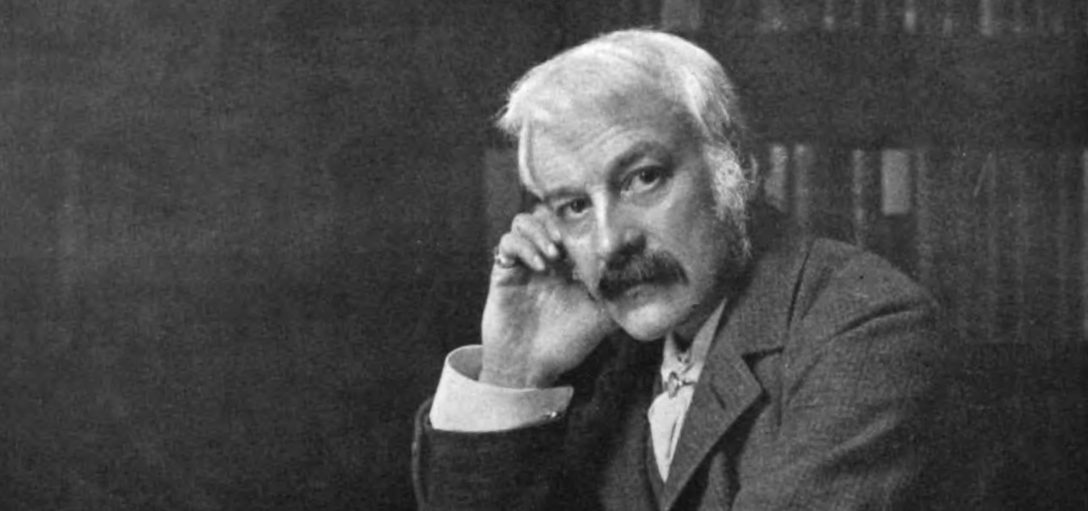
I am currently uncertain of the full extent to which Lang wrote for the Pall Mall Gazette, founded by George Smith in 1865. Lang wrote at least one article (and probably more) for the Pall Mall Gazette under the editorship of Frederick Greenwood (1865–80),* a Tory, and previous editor of the Cornhill from 1862–65. Henry Yates Thompson, Smith’s son-in-law took over the paper in 1880 and changed its politics. However, Lang had written under the Pall Mall Gazette‘s new editor John Morley** (Pall Mall editor from 1880–early 1883) when Morley was editor of the Fortnightly Review. Lang continued to write for the Pall Mall Gazette under Morley, and, at least initially, under Stead: Lang’s reviews of Treasure Island (15 Dec. 1883) and of Besant’s lecture, “The Art of Fiction” (30 Apr. 1884), appear in the Pall Mall Gazette. On 30 Dec. 1884, however, Lang was writing to Stevenson about his series English Worthies, for which Stevenson was to contribute the biography on Wellington (Demoor, Dear Stevenson 76) and wrote, “I don’t want you to do any jobwork, least of all for Yates Thompson” (76).*** Lang then publicly clashed with W. T. Stead after Stead’s campaigns against logrolling and the Rider Haggard plagiarism controversy (1886–87).
The Pall Mall Gazette would go on to have a very prickly relationship with Lang; but it never stopped discussing his books, lectures, magazine articles, friends and associates, and character, showing that the periodical’s writers always believed Lang was a worthwhile figure with whom to spar—and that they felt his ideas and style deserved notice—sometimes blame—and, occasionally, praise.
*Frederick Greenwood launched the Saint James Gazette (which he edited until 1888) after resigning from the Pall Mall in protest in 1880, when the Gladstonian Henry Yates Thompson, George Smith’s son-in-law, became the new owner (See Odin Dekkers’ “Frederick Greenwood” and Christopher Kent’s “Pall Mall Gazette” in the DNCJ.)
**John Morley, previously editor of the Fortnightly Review (from 1867–82), began editing the Pall Mall Gazette in 1880 but was elected to Parliament in Feb. 1883 (for Newcastle upon Tyne). Morley had also edited The Literary Review “around 1861, and of the Cobdenite Morning Star in 1869″ (Kent, “John Morley” DNCJ). Christopher Kent also notes that he wrote for the Saturday Review after this, and “mainly for financial reasons, . . . edited Macmillan’s Magazine” from May 1883–1885.
***Marysa Demoor describes the situation as follows: Yates Thompson was the “owner of the Pall Mall Gazette, in which [Stevenson’s] the “Body Snatcher” had just appeared. AL disapproved of the innovatory character of that newspaper for which W. T. Stead (1849–1912), its sole editor from 1883 onwards, was mainly responsible” (76).
1875
“The Works of Edgar Allan Poe.” vol. 30, 1 March. 1875, p. 812. (Marysa Demoor attributes this notice in Dear Stevenson, p. 37)
1882
(B. Meredith Langstaff attributes to Lang the following anonymous poems from 1882 but does not note his reasons for attribution):
“Idylls of the Dado. I. The Private View.” Pall Mall Gazette, Wed. 4 Jan. 1882, p. 4 (poem)
“Idylls of the Dado. II. The Disappointing Deep.” Pall Mall Gazette, Sat. 17 Jan. 1882., p. 4. (poem)
“Idylls of the Dado. III. The Press View.” Pall Mall Gazette, Wed. 11 Jan. 1882, p. 5. (poem)
Langstaff also ascribes an unnamed work from 8 February 1882 to Andrew Lang; perhaps he means the poem “Our Eskimo Constitution,” on p. 4—but neither the actual title nor the reason for attribution are given; “Our Eskimo Constitution” seems to be the work he was intending due to the subject and Lang’s other discussions of Inuit customs (with varying degrees of seriousness) in Rhymes a la Mode (1885: 138) Custom and Myth (1885), Myth, Ritual and Religion (1887), and other writings. The poem “Our Eskimo Constitution” quotes and responds to an absurdity printed in the Evening Paper: “The Eskimo (we say the Eskimo, because little is known of that people) may choose their statesmen, as they choose their captains, for their dreaminess, their altruism, and their devotion to the Abstract”:
The Eskimo (so little’s known)
Of them, we’ll e’en say what we list)
Prefer a chief who dreams alone–
In fact, a sickly Altruist . . .
Without absolute evidence, I would be confident attributing the review of Stevenson’s “New Arabian Nights” to Lang (4 Aug. 1882, p. 4), based on the following reasons:
1) The author of the review is clearly familiar with Stevenson’s early work: “Whether any of the admirers of Mr. Stevenson’s previous works will shake their heads over this we cannot say . . . but it may be said that if the publication does not gain him a new and goodly contingent, why then the public must confess its inability to appreciate the purely fantastic in literature.”
2) The author is also familiar with the obscure and defunct periodical London, edited first by Robert Glasgow Brown and later by W. E. Henley, for which Lang sometimes wrote (Demoor, Dear Stevenson, 6), claiming that the New Arabian Nights stories “though they appeared scarce five years ago, appeared in a paper which, as it is long deceased, may be said to have been much better written than read.”
3) The review refers to other authors such as Poe and Balzac, whom Lang has elsewhere admired.
4) The closing line praises Stevenson’s short-story romances in Lang’s typical extravagant but subjective style: “the soul of him who enjoys it can only be filled with a tender pity for the soul of him who does not.”
5) As seen in 1883 below, Lang would review Stevenson’s Treasure Island in the same venue.
1883
“Treasure Island.” Lang anonymously reviewed Stevenson’s Treasure Island in vol. 38, Sat., 15 Dec. 1883, p. 4–5. (See Marysa Demoor’s Dear Stevenson, p. 9, where Lang claims authorship.)
1884
“The Art of Fiction.” Pall Mall Gazette. 30 April 1884. [Vol. 39, No. 5973], 1–2. [This is a signed review of Walter Besant’s lecture, “The Art of Fiction” and is given prominent place in the paper, starting on page one and following only the unsigned leader “Romance and Finance”]
1887
See the Pall Mall Gazette’s response (most likely Stead’s) to Lang and Walter Herries Pollock’s He (26 Feb. 1887), pp. 3–4 and Stead’s campaign during this time against logrolling. Lang wrote to the Pall Mall Gazette over the Rider Haggard plagiarism controversy in 1887, with his letter quoted and discussed in “The Ethics of Plagiarism,” 5 Apr. 1887, p. 3, where he responded to their 2 April charges. During this year, Lang’s books and lectures continue to be noticed regularly in the paper, sometimes in a nonpartisan manner, sometimes with a jibe, and sometimes with a compliment (possibly from a different hand). The 31 May and 1 June notices of “Literary Plagiarism” are very different. On the former date, Stead disingenuously claims to find Lang abandoning Haggard as a plagiarist and bitingly remarks, “Perhaps he has now read Jess” (“Occasional Notes,” 31 May 1887, p. 3), but the next day the paper states, in its notices of the magazines, “Mr. Andrew Lang writes frankly, pleasantly, and on the whole sensibly on the subject of ‘Literary Plagiarism'” (1 June 1887, p. 11).
As the Pall Mall Gazette is digitized in British Newspaper Archive, I anticipate that other Lang contributions may be uncovered. It is also worthwhile to search the archive for references to Lang, as the Pall Mall discusses Lang frequently and is particularly useful for dating some of Lang’s lectures and many of the controversies in which he was involved.
Selected articles in the Pall Mall Gazette about Lang (in progress)
(There are hundreds of short notices of Andrew Lang, and his work, and his doings that are not included below; the ones below in themselves show that Lang and his work were frequent topics in the Pall Mall Gazette.)
- “Rhymes a la Mode.” [Review of Lang’s book.] 15 Jan. 1885, p. 4–5.
- “An Editorial ‘We.'” “Correspondence. Log-Rolling. To the Editor of the Pall Mall Gazette.” 11 Feb. 1886. p. 6.”The Log-Rollers’ Defence”, Pall Mall Gazette, vol. 44, 29 Nov. 1886., p. 5. (See Lang’s 3 Dec. 1886 letter in Dear Stevenson 103.)
- “An English Academy of Letters. ‘Immortality’ by Plebiscite.” 24 Feb. 1887, pp. 1–2. Andrew Lang is number 37 on a list, decided by vote, of “the forty living Englishmen who should first receive ‘immortality’ if an Academy of Letters on the French model were to be established in this country” (1).
- Notice of He in “Occasional Notes.” 26 Feb. 1887, p. 3.
- “Puss and Boots. A Lecture by Andrew Lang.” 31 Oct. 1887, pp. 13–14. [Note: p. 6 (“At Home and Abroad” notes that this lecture took place at Toynbee Hall, Whitechapel.]
- “Picture Exhibition in the Pampered East. The Black-and-Whites at St. Jude’s. By a West-ender.” 2 Jan. 1889, p. 7. “It is true that in no part of London are there so many of the poor, and of what is known as the lower middle class, as in Whitechapel. But it is equally true that in no other quarter of the metropolis do the people have so much done for their instruction, improvement, and amusement. At St. Jude’s, or Toynbee Hall, alone, they are given opportunities for which we of the West-end cannot but envy them. There, for example, Mr. Huxley, Mr. Andrew Lang, or Mr. Tadema, whom we find it almost impossible to hear for love or money, lecture to the workman for nothing” (7).
- “The Lays of a Lang-Worshipper.” Review of Thomas Hutchinson’s Ballades and Other Rhymes of a Country Bookworm. 28 Feb. 1889, p. 3.
- “Who Are the Greatest Living Scotsmen?” 6 Mar. 1889, p. 6. While short, the results of a “newspaper plebiscite” is reported in which there are few literary representatives, leading the Pall Mall to report, “But where, asks the Newcastle Leader, are the literary men? Where are Robert Louis Stevenson and the author of ‘Olrig Grange,’ and Andrew Lang. Surely they read books in Scotland, and do not regard Professor Blackie as quite their greatest man of letters” (6).
- “Lang’s Leaders.” 16 Apr. 1889, p. 3. (Review of Lost Leaders.)
- “Mr Andrew Lang on Criticism.” 16 May 1890. p. 6.
- “Essays in Little.” Review of Lang’s book. 28 Apr. 1891, p. 3.
- “International Folk-Lore Congress. Opening Sitting Yesterday.” [Report of Andrew Lang’s address.] 2 Oct. 1891, p. 7.
- On 19 October 1891, the Pall Mall Gazette reports on article in the New York Independent asking “What is the precise value in pounds sterling of a poem by Andrew Lang?” (See also “Literary Notes, News, and Echoes,” 24 Aug. 1889, p. 1.)
- “A Rehabilitation.” Review of Andrew Lang’s biography of John Gibson Lockhart. 26 Oct. 1896, p. 4.
- “The Angler’s Edition of Walton.” Review of Lang’s edition of Izaak Walton’s The Compleat Angler, 11 Jan. 1897, p. 4.
- “Mr Andrew Lang on Cricket.” 15 Apr. 1897, p. 8.
- “Andrew Lang Among the Soutars of Selkirk,” p. 6.
- “The Bran-Pie of Current Literature. By an Irresponsible Reader.” 25 June 1898, p. 4. “There is the sad case of Andrew Lang to warn all and sundry to what excesses an indulgence in anthropology, ethnology, and kindred complaints may lead the most blameless of scholars” (4).
- “Literary Notes.” (Signed S. G.) 4 Sep. 1899, p. 1. “One row makes many, and Mr. Andrew Lang is in a fair way to convert the magazines into a kind of literary Donnybrook. . . . Mr. Lang commends a catholic taste, but there is hardly any critic whose likings are more limited. What he likes he likes so much that he does habitually rather more than justice to storytellers like Mr. Haggard; but a good many good things which do not happen to please him–like Miss Brontë’s writings–fare badly at his hands. After all, ought a critic to have a catholic taste? If Mr. Lang praises a book I know that I shall like it; some more impartial judges do not give me the same assurance. And the judicial habit of mind does not make for liveliness in writing” (1). Keywords: Charles Dickens, Jane Austen, Charlotte Brontë, George Sand, Walter Scott, Rider Haggard, Stevenson. [Stephen Gwynn alludes to his article “The Sensibility of Critics” in the Cornhill Magazine, which had some rather personal criticisms, Aug. 1899, pp. 229–33.]
- “A Brilliant Novel.” [Positive review of Parson Kelly, co-written with A. E. W. Mason.] 15 Jan. 1900, p. 4. (See also “Literary Notes,” 8 Jan. 1900, p. 1.)
(Please note that the Pall Mall’s notice of Lang does not end in 1900–my past searches in the BNA, however, did. I hope to return to this page soon.)
Return to the list of periodicals to which Lang contributed.
This page was last updated on 27 Jan. 2025 but is still in progress.
 The Andrew Lang Site